Counselling & Coaching for ADHD – Structured Adult ADHD Support
ADHD in adults is often misunderstood.
It is not a lack of intelligence or motivation. Rather, it reflects differences in how the nervous system regulates attention, emotion, impulse and energy (Barkley, 2015).
Importantly, therapy is not limited to those with a formal diagnosis; it is equally relevant for individuals who recognise ADHD traits in themselves and want structured, informed support.
Counselling and coaching for ADHD provide structured, practical support for adults who recognise ADHD traits in themselves – diagnosed or not – and want to understand their patterns, improve regulation and regain control.
This is not a diagnostic service.
Instead, the focus is on helping you make sense of your lived experience and learn how to work with your natural wiring rather than fight against it.
Understanding ADHD Beyond Focus
ADHD often affects:
- Emotional regulation
- Task initiation and completion
- Energy rhythms
- Impulse control
- Internal self-criticism
- Confidence and follow-through
When regulation becomes dysbalanced, life can feel chaotic or inconsistent.
However, meaningful change does not come from “trying harder.”
It comes from understanding what drives your patterns – and strengthening the nervous system underneath them
How Counselling for ADHD & Coaching for ADHD Support You
✔ Understand Your ADHD Regulation System
Counselling for ADHD helps you explore how your emotional responses, attention shifts, and energy patterns are shaped by nervous system sensitivity and past experiences. Therefore, once you understand why these patterns occur, they become easier to manage.
✔ Reduce Emotional Overload
Many adults with ADHD experience emotions intensely. Through therapeutic coaching and regulation strategies, you learn ways to soften overwhelm, reduce reactivity, and stay calmer under pressure.
✔ Improve Focus Without Forcing It
Instead of relying on willpower, coaching for ADHD introduces practical tools that help focus feel more accessible — even on days when motivation is low. This includes task-shaping, sensory strategies, body-based tools, and personalised focus techniques.
✔ Build Consistency & Follow-Through
ADHD often affects task initiation and completion. Counselling and coaching help reduce avoidance, perfectionism, and internal pressure, allowing you to start and finish tasks more steadily.
✔ Strengthen Emotional Regulation & Self-Trust
As your internal regulation improves, decision-making becomes clearer, reactions soften, and confidence grows. This creates a strong foundation for living with ADHD in a way that feels manageable and empowering.
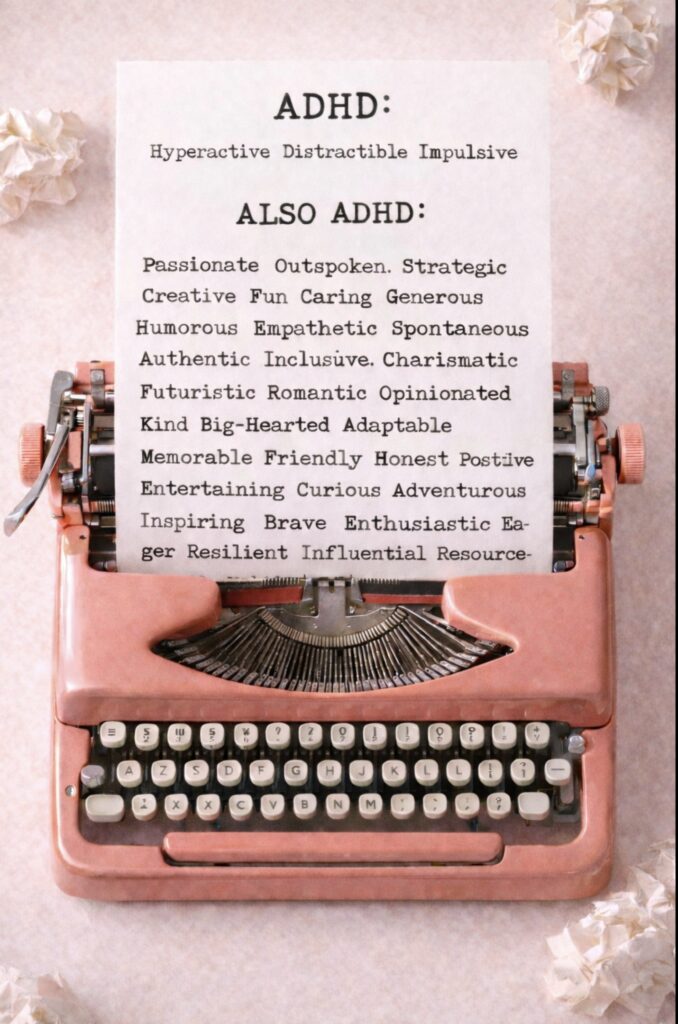
Your ADHD Traits Are Not the Problem
Importantly, ADHD counselling and coaching focus on working with your strengths.
Many ADHD traits can become performance assets when guided intentionally:
Creativity – Generating original ideas and connections.
Curiosity – Exploring, questioning and learning deeply.
Enthusiasm & Hyperfocus – Intense engagement when motivated.
Intuition – Recognising patterns quickly.
Drive & Originality – Energy and innovation under pressure.
Rather than suppressing these traits, we learn to channel them in ways that support wellbeing and stability.
A Nervous-System-Led Approach
This work focuses on management — not suppression.
Through counselling, ADHD coaching and psychoeducation, ADHD becomes understandable and actionable. In doing so, you learn tools that genuinely work for your brain.
As regulation improves:
- Attention becomes easier to guide
- Overwhelm reduces
- Reactions soften
- Confidence increases
- Decisions become clearer
- Life feels more intentiona
The aim is not to change who you are – but to strengthen how you operate.
Your ADHD Traits Aren’t the Problem — They’re Part of Your Potential
A key part of ADHD counselling and coaching is helping you work with your natural strengths, rather than trying to eliminate them.
Many ADHD traits are also performance assets when guided intentionally:
Creativity
Thinking differently, making unusual connections, and generating fresh ideas.
Curiosity
A natural drive to explore, question, experiment, and learn.
Enthusiasm & Hyper focus
Deep passion and intensity when engaged in something meaningful.
Intuition
An instinctive sense for people, patterns, and possibilities.
Drive & Originality
High-energy bursts, innovation, and problem-solving under pressure.
Rather than suppressing these traits, we learn how to channel them so they support your wellbeing and performance.
ADHD Support in Your Area
We offer specialist ADHD counselling and coaching across our South East London locations:
Greenwich (SE10)
EMDR, somatic therapy and Walk & Talk sessions.
→ Explore ADHD Therapy in Greenwich
Woolwich (SE18)
Hypnotherapy and EMDR-based ADHD support.
→ Explore ADHD Therapy in Woolwich
Blackheath (SE3)
Structured CBT-focused ADHD therapy.
→ Explore ADHD Therapy in Blackheath
Each approach is evidence-informed and tailored to individual goals.
Bringing ADHD Back Within Your Control
This is not a one-size-fits-all process.
It is about identifying strategies that genuinely match your mind, lifestyle and ambitions.
If your mind feels powerful but difficult to steer, counselling and coaching help you learn the controls — so you can move forward with clarity and confidence.
Ready to Take the Next Step?
Book a consultation to explore how counselling and coaching for ADHD can help you regulate your mind, strengthen your focus and work with your natural wiring – not against it
Academic References
Barkley, R. A. (2015). Attention-deficit hyperactivity disorder: A handbook for diagnosis and treatment (4th ed.). Guilford Press.
Brown, T. E. (2013). A new understanding of ADHD in children and adults: Executive function impairments. Routledge.
Hammond, D. C. (2010). Hypnosis in the treatment of anxiety- and stress-related disorders. Expert Review of Neurotherapeutics, 10(2), 263–273.
Shapiro, F. (2018). Eye movement desensitization and reprocessing (EMDR) therapy: Basic principles, protocols, and procedures (3rd ed.). Guilford Press.
van der Kolk, B. A. (2014). The body keeps the score: Brain, mind, and body in the healing of trauma. Viking.